
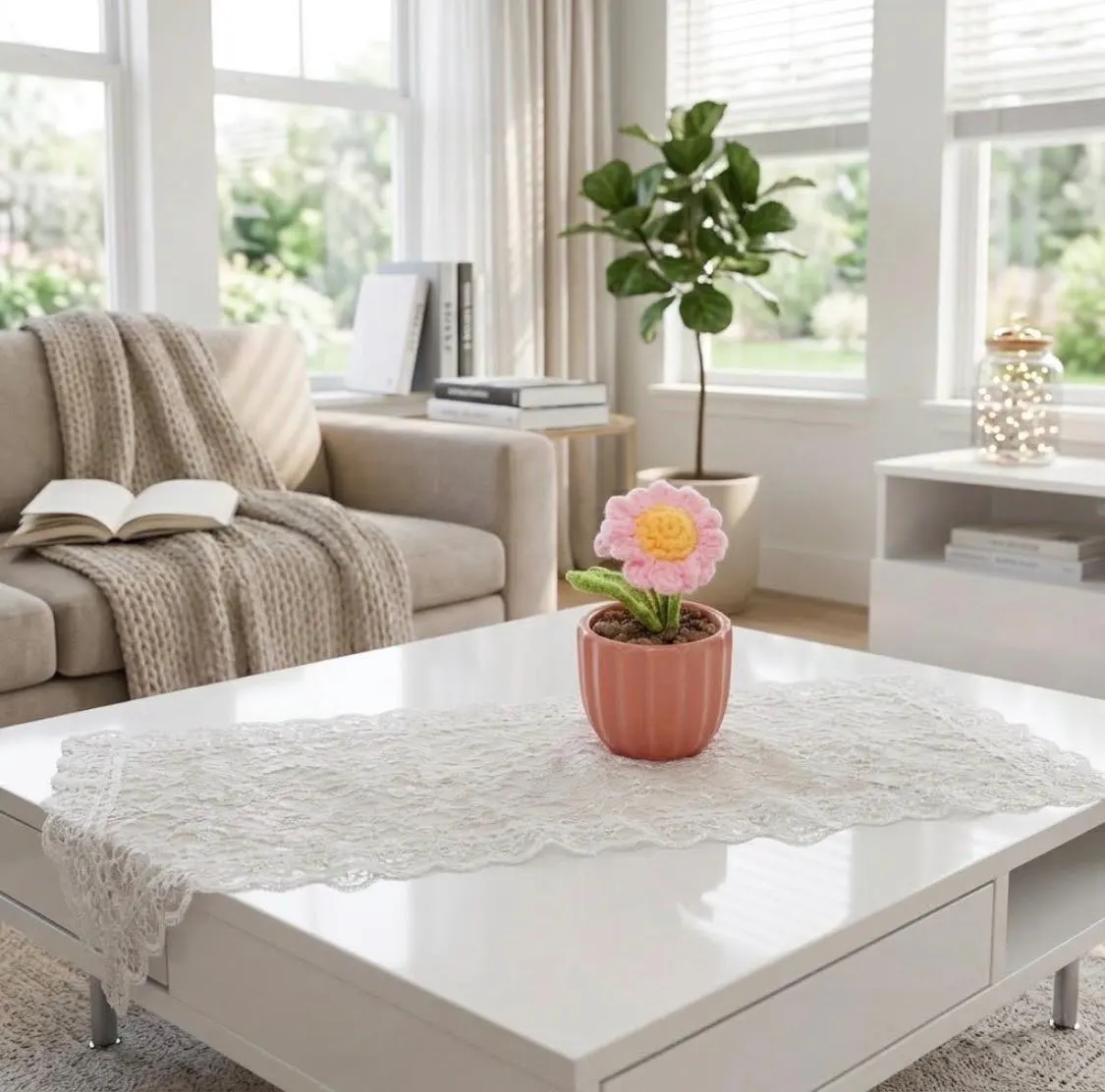
Handmade crochet pieces pick up everyday marks—crumbs, makeup smudges, or a drip of coffee. Spot cleaning is a sensible way to address those small problems without committing an entire item to a full wash. This guide outlines cautious, actionable steps: how to test, what to use, and when to pause and check the maker’s guidance before you proceed.
How to spot clean handmade crochet accessories
Start by asking whether the maker’s listing includes care instructions. Listings for items at our shop sometimes note fiber content or a recommended method; when that information is present, treat it as your primary guide. If no guidance is given, proceed conservatively and plan to test any cleaning method first on an obscure seam or inside edge.
The phrase spot clean handmade crochet accessories describes targeted stain removal rather than soaking. The goal is to remove a localized mark with the least disturbance to the surrounding fabric and structure. Keep tools nearby, work on a protected surface, and take time instead of applying force that could stretch or distort stitches.
Before you start: test an inconspicuous area
Always pick a hidden spot—inside edges, the back of a loop, or the underside of a tassel—and apply your chosen solution in a tiny amount. Wait several minutes to check for color bleed, fiber reaction, or texture change. A quick test can reveal sensitivity that a larger treatment would make irreversible.
If the test shows any dye transfer, pilling, or softening, stop and document what you observed. Different yarns and dyes behave differently; what’s safe for one item may not be safe for another. In such cases, contact the seller or maker for their recommended approach if that option exists.
Tools and gentle solutions to have on hand
Assemble neutral tools: a clean white cloth or cotton swab, a small bowl of cool water, a soft-bristled brush, and a mild, pH-neutral detergent diluted in water. You can also keep a diluted white vinegar solution on hand for certain odors or mineral spotting, but test it first. Avoid bleach, strong solvents, or highly alkaline cleaners.
Use a new or dedicated cloth for blotting to avoid transferring dye or residue. Measuring a few drops of detergent into water creates a gentle mixture; too much soap increases residue and can attract dirt. For grease marks, a tiny dab of dish soap often helps, but the same testing rule applies before wider use.
Dab, don’t rub: practical spot-cleaning techniques
Blot the stain from the outside edge toward the center to prevent spreading. Apply the solution sparingly with a cotton swab or corner of your cloth, then press gently to lift the stain. Work slowly and lift frequently to see progress; repeated aggressive rubbing can fuzz or widen a hole in delicate crochet work.
For stubborn spots, let the dampened area rest under a clean cloth for a few minutes to loosen the stain, then blot again. Use a soft toothbrush for textured sections, sweeping gently along the direction of the stitches. If the stain lightens but doesn’t disappear, stop and reassess rather than continuing until you risk over-wetting.
Tackling specific stains without over-wetting
For oily or greasy smears, pre-blot to remove excess, then use a tiny amount of dish detergent solution on a swab, followed by blotting with plain water to remove soap residue. For water-based spills like juice or coffee, plain cool water often suffices at first; add a mild detergent only if necessary.
If a stain resists spot treatments after reasonable attempts, consider whether the piece can tolerate a fuller cleaning based on maker notes, or whether professional textile cleaning is appropriate. Avoid saturating a stuffed amigurumi or a wall hanging backing—excess water can shift stuffing, dyes, or structure in ways spot work won’t fix.
Drying, reshaping and when to seek maker advice
After spot cleaning, press out moisture gently with a towel and lay the piece flat to dry in its natural shape. Avoid heat sources or wringing, which can shrink or misshape fibers. Reshape the item while damp if stitches have loosened, but do so gently and in small adjustments to preserve the original tension.
When in doubt, reach out to the listing’s details or contact the maker. If a product description mentions specific fibers, construction, or small-parts cautions, follow those directions instead of general advice. If you bought an item from our store and want clarification on a listing, you can contact Helium South Beach for help locating the original listing information.
Spot cleaning handmade crochet pieces can extend their life when done with care: test first, use gentle solutions, and avoid aggressive rubbing or soaking. If the listing for your item includes care notes, follow those; otherwise treat every intervention as a small experiment. For questions about a particular Helium South Beach listing, email [email protected] or call +1 305-538-4526, or visit us at 760 Ocean Drive Store No. 6, Miami Beach, FL 33139. Our Instagram is @helium_southbeach.