
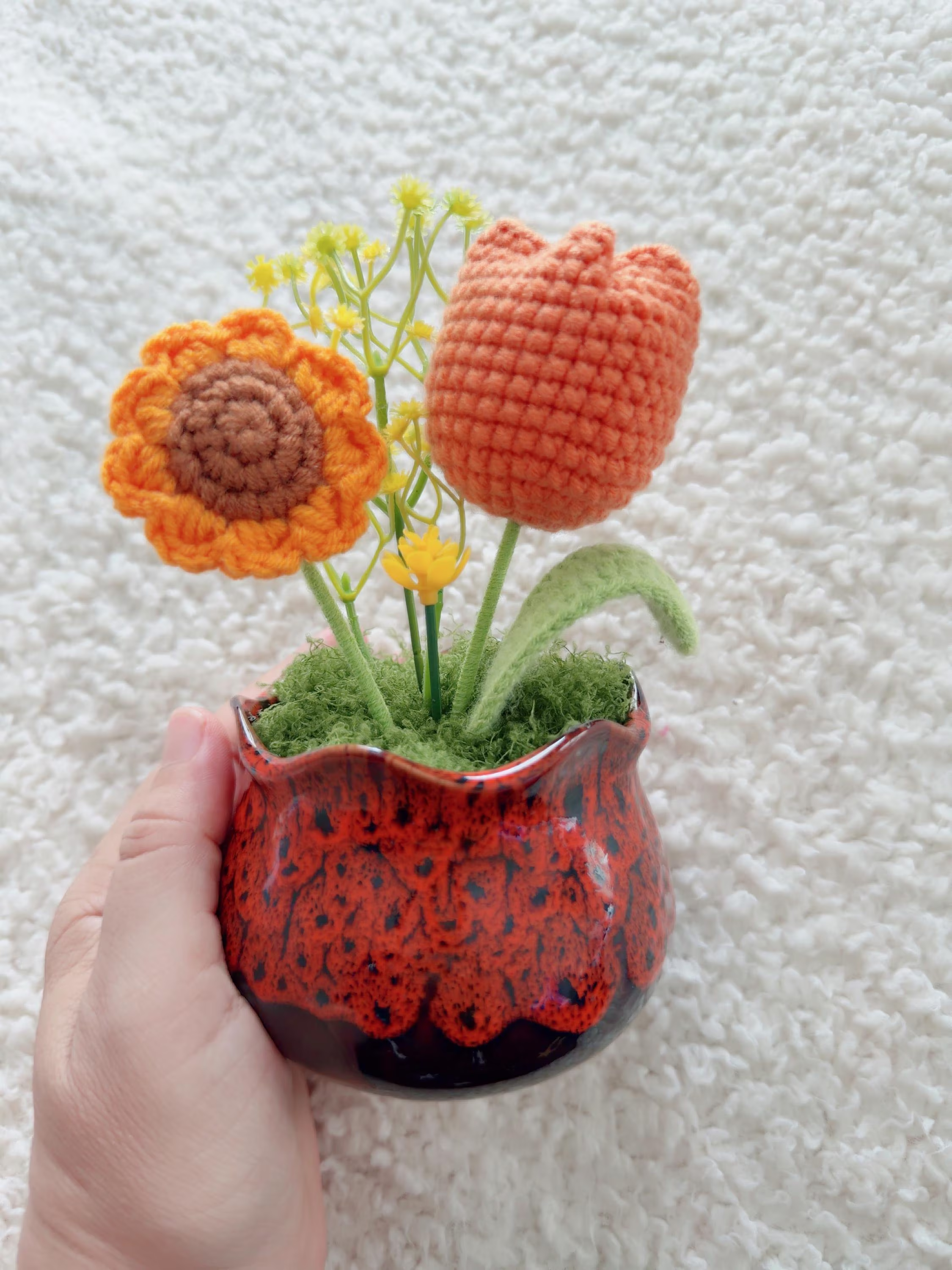
When a wholesale buyer reaches out, clarity saves everyone time. At Helium South Beach (HELIUM, INC.) we use a concise onboarding checklist to move a lead into an informed conversation: business contact details, clear product listings, image access, ordering questions and confirmed terms. Our storefront at 760 Ocean Drive Store No. 6, Miami Beach, FL, and contact channels ([email protected], +1 305-538-4526, Instagram @helium_southbeach) are the start of that exchange.
Collect complete business contact information first
Begin by asking for the buyer’s legal business name, billing and shipping addresses, a preferred phone number, and a primary email. These pieces let you route requests correctly: billing goes to accounting, shipping questions to operations, and creative or buying notes to the storefront or wholesale contact. When those details are missing you often spend multiple back-and-forth messages just to get an invoice to the right place.
Decision point: require a reseller certificate or tax ID up front or allow a later submission. Requiring paperwork up front speeds contracting but can slow initial conversations; accepting it later can make outreach easier for buyers who are comparing vendors. A practical compromise is to collect contact details immediately and offer a clear deadline for paperwork to be on file before fulfillment or pricing terms are finalized.
Organize product listings and SKU clarity
With 108 listings spanning Amigurumi, Crochet, Wall Hangings, and Craft Supplies & Tools, give buyers an organized index and consistent identifiers. Use SKU or catalog numbers, short descriptive names, and a single-line summary that explains what the item is and which category it lives in. Example: SKU HSB-AC-012 — Crochet Rainbow Wall Hanging — handmade cotton; category: Wall Hangings.
Trade-offs: high detail in each listing reduces follow-up questions but takes more time to prepare. Minimal listings are faster to publish but invite repetitive questions. A useful middle path is a two-tier presentation: a compact catalog view for browsing and an expanded product sheet for any item the buyer flags, with materials, care notes, and small-parts cautions where the original listing provides them.
Provide structured image access and specifications
Make product images easy to download by grouping them in one shared folder or a clear gallery system and label each file by SKU. Include at least one contextual photo and one close-up for texture or detail. If you supply multiple image sizes, name them consistently so buyers can grab the correct resolution for their storefronts or marketing materials without guesswork.
Be explicit about image usage terms and technical specs: file format, max resolution, color profile, and whether alt text is available. Buyers will choose between faster approval (use the provided images as-is) or tighter branding control (requesting custom shots or different formats). Offering both options lets you handle common needs quickly while showing flexibility for larger accounts.
Anticipate common ordering questions and answers
Typical questions include minimum order quantities, turnaround expectations, sample availability, and customization options. Prepare concise starter answers you can share instantly, and flag which items require additional confirmation. For example, note whether a handmade listing may have small natural variations and whether that affects ordering at scale.
There’s a trade-off between comprehensive automated responses and personal follow-up. Automated templates speed responses and reduce repetitive typing; personal replies build rapport and let you address nuance. A hybrid approach—automated acknowledgement with a promise of a personalized follow-up within a specified window—keeps momentum without over-committing resources.
Confirm terms, paperwork, and invoicing expectations
Outline what you will confirm before processing an order: finalized item SKUs and quantities, agreed-upon pricing (if applicable), invoicing address, and any required forms. Provide a standard invoice or order confirmation template so buyers know what the final paperwork will look like and which fields they must verify.
When negotiating terms, note where flexibility exists (for example, ordering thresholds or image licensing) and where it doesn’t. Being explicit about which elements are negotiable prevents misunderstandings. Realistic examples help: state that you can discuss volume-based discounts for larger bundles but that handmade construction timelines may affect availability.
Set next steps and a point person for onboarding
End the initial exchange with clear next steps: who will send the sample, who compiles the final SKU list, and when the buyer should expect the next contact. Provide direct contact channels—email, phone, and Instagram—and indicate a typical response rhythm, such as acknowledging inquiries within one business day, to set expectations without promising guaranteed turnaround times.
Assign a single point of contact for the onboarding process to avoid mixed messages. That person can coordinate with store operations, photography, and accounting to gather the materials needed to finalize a wholesale relationship. If the contact changes, communicate that change immediately and provide updated contact details so the buyer can continue without disruption.
Onboarding wholesale buyers is a practical exercise in reducing uncertainty. Use a checklist that captures contact details, clean listing identifiers, image access, concise answers to ordering questions, and a clear path to confirmed terms. For inquiries or to start the checklist, reach out to Helium South Beach at [email protected] or +1 305-538-4526, visit 760 Ocean Drive Store No. 6, Miami Beach, FL 33139, or find us on Instagram @helium_southbeach.