
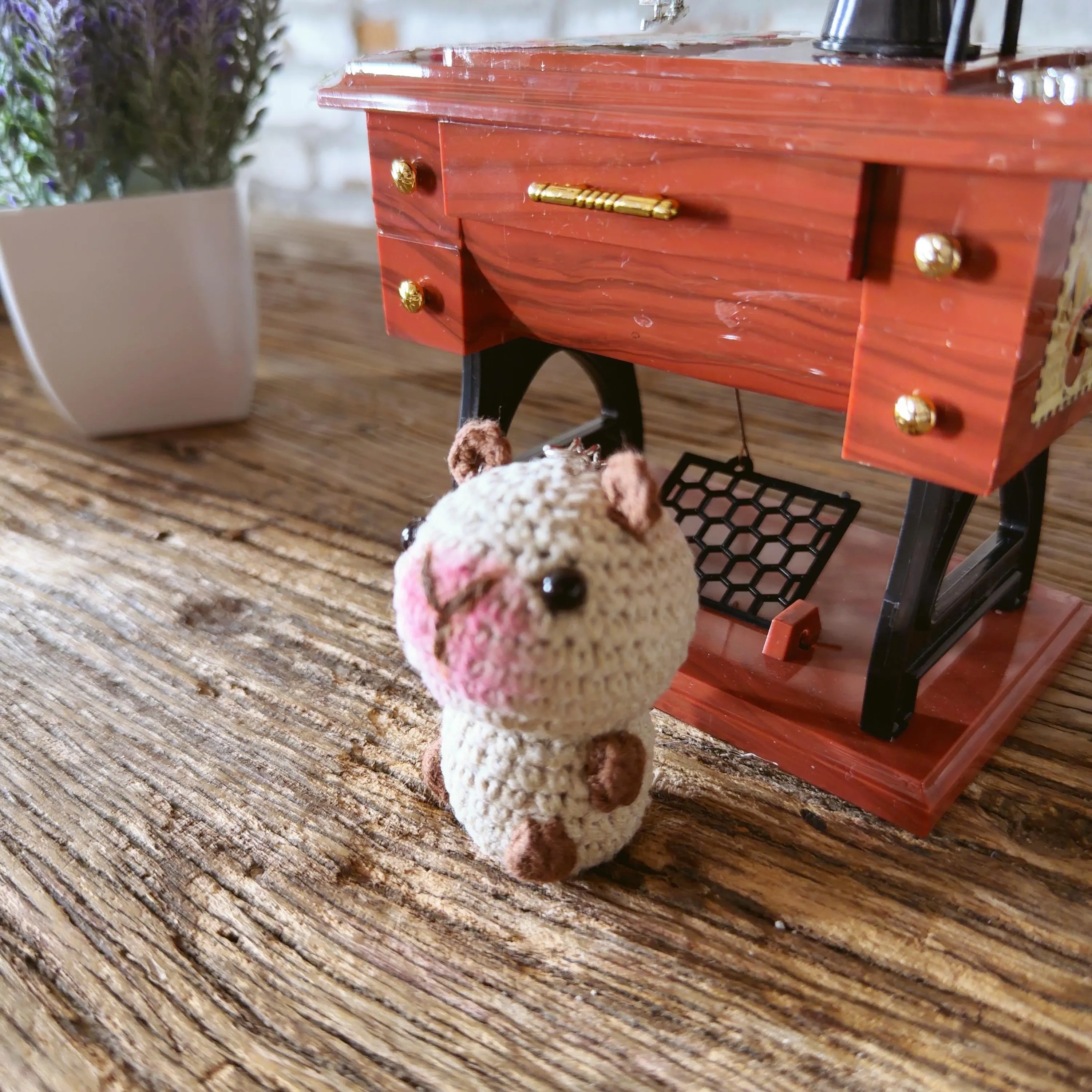
Amigurumi animal-shaped charms add instant personality to a gift shop, but their small scale and variety can make merchandising a challenge. This article offers practical, shop-floor-friendly ways to arrange animal crochet charms for gift shops so customers can see color stories, compare sizes, and understand intended uses without changing the information printed on each listing or tag.
Organizing animal crochet charms for gift shops by color
Color grouping is the fastest way to catch a shopper’s eye: form a rainbow wall, create monochrome clusters, or dedicate an accent shelf to a single hue. For stores with many listings—Helium South Beach lists a broad Amigurumi selection—you can rotate which colors get the front row depending on season and current foot traffic.
Trade-offs include losing sight of size and occasion if you only sort by color. Keep a secondary micro-label that shows size or intended use pulled directly from the product listing so color-first displays don’t overwrite essential product details.
Grouping by size and visual scale
Separate tiny charms from larger, chunkier amigurumi so customers understand scale without needing to pick everything up. Use risers, tiered trays, or shallow bowls for small pieces and flat-edge shelving for larger items. A single eye-line shelf should showcase items of similar visual weight to avoid a cluttered look.
The decision point is balance versus accessibility: tightly grouped small items look curated but can appear busy; spread-out presentations read as higher-end but use more space. Preserve correct product descriptions by placing a clear tag or card near each size group with exact listing language about dimensions and materials when the listing provides that information.
Separating by occasion and gifting intent
Create small vignettes for birthdays, holidays, or everyday gifting so shoppers can imagine a complete present. Combine an animal charm with complementary gift-wrap, a blank card, or a display suggesting a use—without implying accessories are included. Label each vignette with simple prompts like 'gift idea' or 'party favor' rather than prescriptive claims.
Rotating occasion groupings boosts relevance but requires updating labels and product placement. Keep the product’s original description visible (or an exact excerpt from the listing) near the charm so shoppers see what the item actually includes and any maker-provided notes about construction or care.
Display context: counters, windows, and shelves
Choose display context based on shopper behavior. Impulse-friendly charms do well on the checkout counter or near the register; statement pieces deserve window space or a center-table spread. Consider sightlines: tiny amigurumi need contrast and lighting to read from a few feet away, while larger models survive lower-light back-shelf placement.
Security and accessibility are trade-offs. Checkout displays increase sales but risk damage or loss; window displays attract attention but reduce hands-on examination. In all locations, keep the product’s listing title, SKU, and any essential notes from the listing clearly attached to maintain accurate descriptions for customers and staff.
Labeling to preserve correct product descriptions
Use short printed tags that quote the listing precisely for materials, maker notes, or care instructions when those details exist. Avoid paraphrasing technical claims: if a listing states a charm is handmade or lists fiber content, reproduce that wording on the tag rather than inventing new descriptors that could mislead a customer.
For inventory and customer questions, include SKU or listing number on every tag so staff can look up the full online description. If a listing includes small-parts cautions or specific care instructions, repeat those verbatim on the shelf card rather than substituting general guidance.
Practical merchandising combinations and cross-sells
Pair charms with complementary items such as key rings, small pouches, or display-ready hardware, but make clear in signage that the charm and accessory are sold separately unless the listing states otherwise. Present a few curated pairings to help shoppers visualize uses without assuming anything about what each product includes.
Test different pairings in short runs to see which combinations convert. Track what sells together and keep tags consistent: list both item SKUs where cross-sell packages appear, and always reproduce the exact product titles from listings so customers and staff can match display pieces to the store catalog quickly.
Good merchandising of animal crochet charms for gift shops balances visual impact with factual clarity: use color, size, occasion, and context to create attention-grabbing displays while keeping each product’s correct description front and center. If you want to see examples in person, visit Helium South Beach at 760 Ocean Drive Store No. 6, Miami Beach, FL 33139, or contact [email protected] and +1 305-538-4526. For visuals and quick inspiration follow our Instagram https://www.instagram.com/helium_southbeach/?hl=en. Our catalog includes listings across Amigurumi, Crochet, Wall Hangings, and Craft Supplies & Tools—use that range to mix displays while always relying on the source listing for final product wording.