
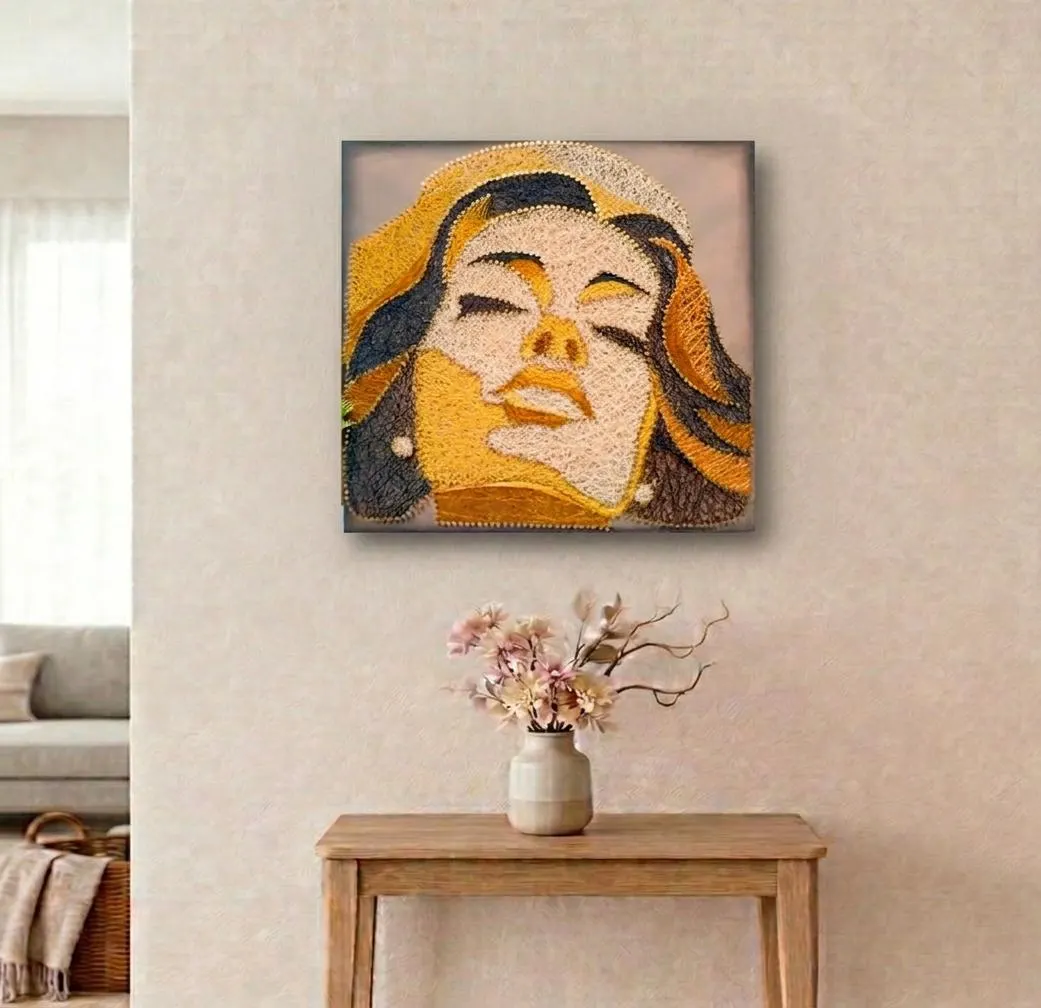
Handmade string art combines delicate thread work with rigid wood backings, and keeping these pieces looking good requires different care than a framed print or textile wall hanging. Below you’ll find clear care tips for handmade string art decor that emphasize careful handling and dusting, and remind you that any product-specific directions on an individual listing should take precedence.
Care tips for handmade string art decor: handling basics
Always support both the wood backing and the stitched or wound thread area when you move a piece. Lifting a work by its hanging hardware alone can strain mounting nails or loosen wrapped thread; instead cradle the board underhand and use two hands for anything larger than a postcard-sized panel.
When planning where to hang your string art, consider traffic and contact points. A low hallway where people brush past will require more frequent light cleaning than a high living-room wall. If the listing for your item calls out delicate threads, follow those maker notes first and use gentler handling.
Gentle dusting methods for thread-and-wood pieces
For routine dusting, use a soft natural-hair paintbrush or a clean, dry microfiber cloth. Lightly sweep across the threads in the direction of the strands rather than against them to avoid loosening wraps or snagging. Move slowly and inspect as you go to catch any pins, nails, or loose ends.
Trade-offs matter: a microfiber cloth lays flat and is great for wood surfaces, while a small paintbrush reaches between tight strands. If a piece has varnished wood, you can use the cloth on the wood and the brush on the thread; if the listing specifies a finish type, follow that guidance for the wood surface.
When to use compressed air, brushes, or cloths
Compressed air can blow dust from tight spots without touching the threads, but use short bursts from a distance to avoid displacing small components or stretching thread. If a listing notes fragile construction or loosely wrapped nails, skip compressed air and rely on a soft brush instead.
A low-suction vacuum with a soft brush attachment is an alternative for sturdier pieces and larger rooms, but keep the nozzle several inches away and use the lowest setting. If you’re unsure which tool to choose, test on a less-visible area first while following any product-specific care instructions.
Protecting wood backing and fasteners without damage
Avoid excess moisture on wood backings. If the wood needs cleaning beyond dusting, slightly dampen a microfiber cloth with water only, wring it out thoroughly, and blot rather than rub. Do not saturate the wood; water can warp thin boards and affect adhesive joints or finishes noted in a listing.
For exposed nails or pins, gently press any loosened fastener back into place with a small pair of needle-nose pliers, supporting the adjacent wood to prevent splitting. If a listing includes maker-specified hardware recommendations, follow those rather than substituting heavier fasteners that could stress the piece.
Storage and transport: keeping tension and shape
When storing, place string art flat with the thread side facing up and a clean sheet of acid-free paper or unprinted tissue between pieces if stacking. Keep storage in a cool, dry place away from direct sunlight and high humidity to limit potential fading or warping; consult the item listing if it mentions particular fiber sensitivities.
For transport, wrap the front with a layer of soft fabric or bubble wrap that will not snag fibers, and secure the board edges so the piece cannot shift. Carry by supporting the board itself rather than holding the hanging hardware, and if sending an item through a carrier check the maker’s notes for any shipping-related precautions.
Spot cleaning and dealing with stains carefully
Spot cleaning is best approached conservatively. For small surface marks on thread, try a dry eraser made for textiles or gently dab with a barely damp cloth; avoid aggressive scrubbing. If the listing explicitly states fiber type, test any damp method on a hidden edge or follow the maker’s cleaning instructions instead.
If the stain is on the wood backing, a slightly damp cloth with mild soap can work, applied sparingly and dried immediately. When in doubt, reach out to the seller or maker for guidance—product-specific directions take precedence and can prevent irreversible damage from the wrong cleaning method.
Caring for string-and-wood wall hangings is mostly about gentle, consistent attention: handle with two hands, dust with the right tool for the job, protect wood from excess moisture, and follow any maker or listing instructions above all. If you have a question about care for a specific Helium South Beach wall hanging, contact HELIUM, INC. at [email protected] or +1 305-538-4526, visit our store at 760 Ocean Drive Store No. 6, Miami Beach, FL 33139, or see our Instagram @helium_southbeach for listing updates and photos.