
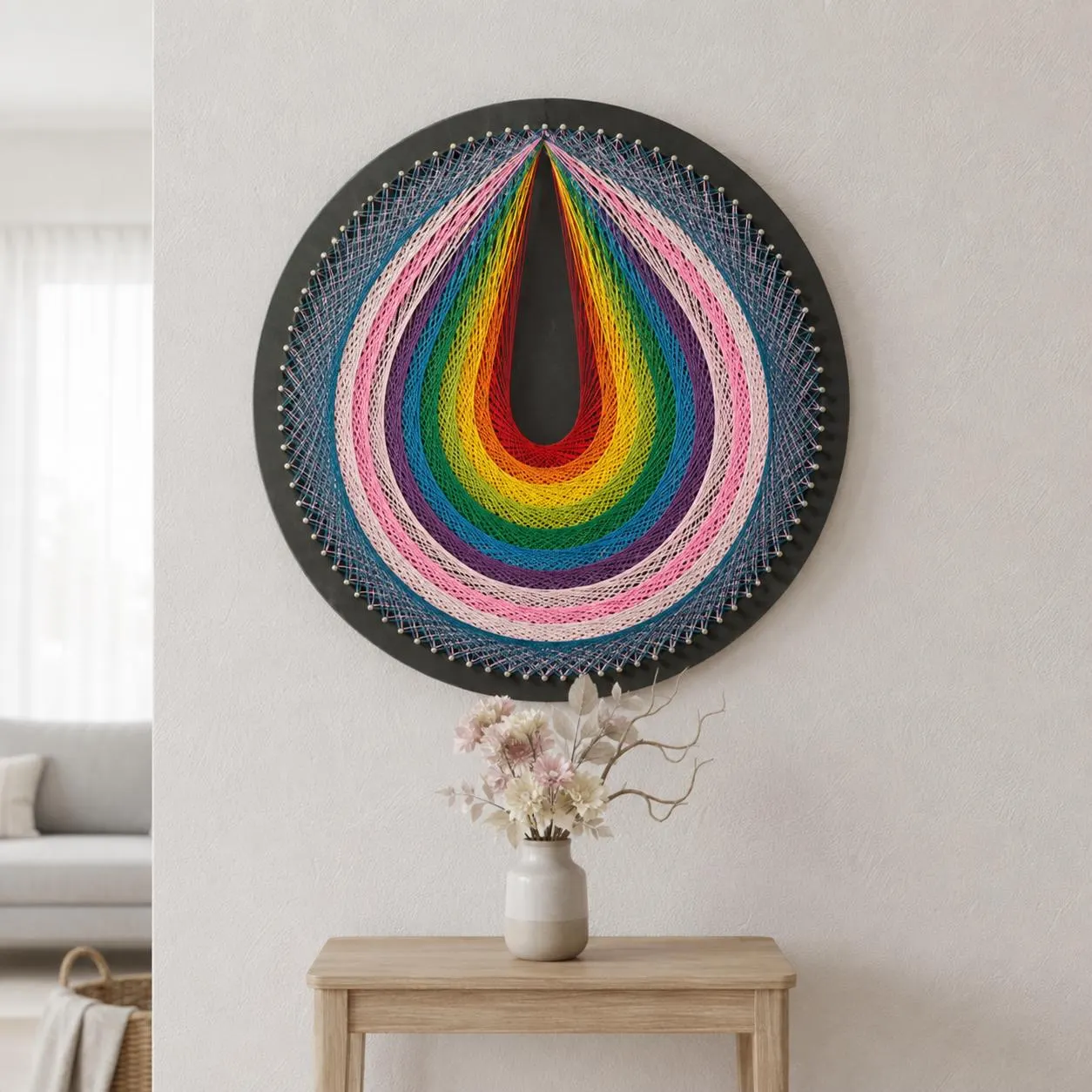
Choosing wall art for a boutique gift corner means thinking like both a buyer and a merchandiser. The right piece complements products, sets a mood, and makes small sections feel curated rather than cluttered. This guide walks through the key trade-offs — size, cost, theme, hanging details and customer fit — so you can pick wall hangings that are display-ready and sellable.
Start with the display footprint and vertical sightlines
Begin by measuring the display area before you shop. Note the wall width, height from the floor to the top of fixtures, and any shelves or pegboards that will sit beneath the artwork. These numbers determine whether a single statement piece or a cluster of small works will read best from a distance.
Think about eye-level for your customers and the relationship between the art and the items below it. A tall macramé or long textile that begins above a product rack draws the eye upward, while a grid of small framed pieces works well over a low table. Trade-offs: large works simplify the composition but limit rotation options; smaller pieces allow frequent change but require careful grouping to avoid visual noise.
Wall art for a boutique gift corner: match scale to sightlines
Match the art scale to how customers approach the corner. If your shoppers stop briefly as they browse, choose pieces with clear focal points visible from the aisle. For corners meant to invite lingering, introduce layered pieces at multiple heights so the eye can travel through the display.
Use negative space deliberately: leaving breathing room around a piece increases perceived value and prevents it from competing with merchandise. For example, a 24–30 inch textile hung with 6–12 inches of clear wall around it will feel more intentional than a crowded cluster of prints with no separation.
Balance price tiers and perceived value
Curate a mix of price points so customers can choose impulsive, mid-range, or investment gifts. Lower-priced small prints, postcards, or tiny weavings make good impulse buys near the register, while larger framed works or handcrafted wall hangings serve as destination pieces that justify higher price tags.
Consider how framing, mats, or textile backing affect perceived value. Simple, consistent presentation can elevate lower-priced items; conversely, artisanal finishes and unique materials justify premium pricing. The trade-off is between turnover and margin: inexpensive items move quickly, while premium pieces turn slower but bring higher per-item revenue.
Choose themes that speak to your customers
Select themes that align with your store’s personality and the neighborhood. Coastal motifs and bright colors might suit a Miami Beach storefront, while minimalist line art could fit a contemporary boutique. Keep theme runs short and coherent so customers can assemble a themed gift from several nearby items.
Rotate themes seasonally or for local events to keep the corner feeling fresh. A temporary display centered on a holiday, local festival, or trending color can test demand for new makers without long-term commitment. Be explicit in signage so customers see how wall hangings pair with other products on the shelf.
Hanging details: hardware, placement, and rotation
Plan for the practicalities: choose hanging hardware suitable for the wall type and the artwork’s weight, and test a few mock-ups before committing to nails or anchors. Consider ease of rotation; lightweight pieces on removable hooks or rails are faster to swap during restocks than permanently mounted pieces.
Think through placement in relation to lighting and glare. Art that depends on texture shows best in directional light, while glossy frames may need anti-glare positioning. Balance permanence and flexibility — permanent installation signals a longer-term investment, while modular hanging systems allow frequent merchandising experiments.
Customer fit: giftability, price points, and impulse buys
Assess how each piece will function as a gift. Consider size for shipping or wrapping, whether a wall hanging can be combined with other small items to make a gift set, and how easily staff can describe care or origin from the tag. Pieces that are easy to wrap and present tend to convert better at the counter.
Train staff to suggest pairing options: a small print plus a scented candle or a textile with a coordinating mug. The right pairing turns a single sale into multiple items and helps customers visualize a complete gift. Track what sells together and use that data to refine which wall hangings stay on display.
Selecting display-ready wall art for a boutique gift corner is about measured choices: matching scale to sightlines, balancing price tiers, choosing resonant themes, addressing hanging logistics, and thinking about giftability. If you’d like in-person advice or to see our wall hangings, visit Helium South Beach at 760 Ocean Drive Store No. 6, Miami Beach, FL 33139, email [email protected], call +1 305-538-4526, or check Instagram at https://www.instagram.com/helium_southbeach/?hl=en.