
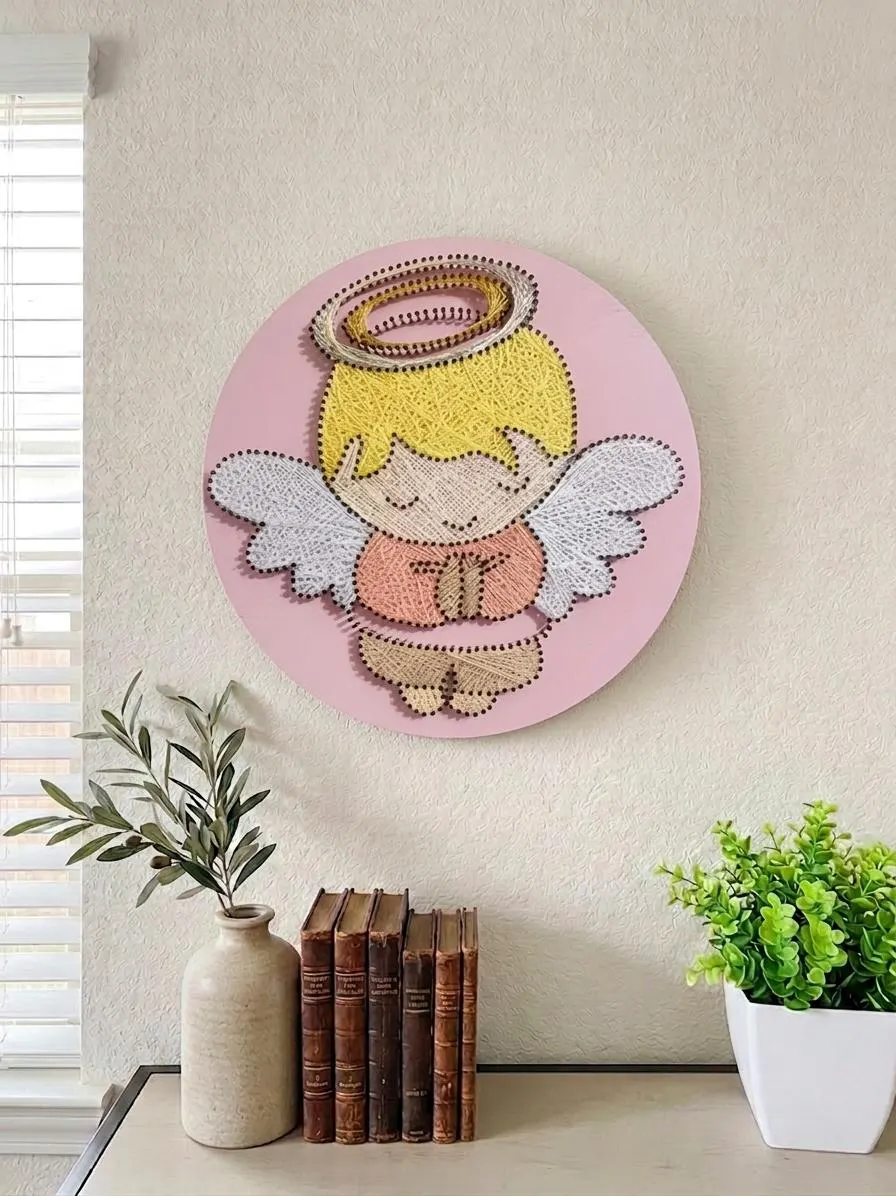
Small rooms reward careful decisions: the right piece can make a tight space feel intentional instead of crowded. When you’re choosing handmade wall art ideas for small rooms, think about the wall itself first—its height, the furniture against it, and how you want your eye to move through the space. That starting frame shapes every other choice, from scale and color to the hardware you’ll use.
Start with the wall area, not the piece
Measure the available wall area before you shop. Note trim, windows, switch plates and the vertical sightlines created by furniture. A wall that’s mostly occupied by a couch behaves differently from a narrow corridor; starting with measurements prevents choosing art that overwhelms or disappears against its backdrop.
Consider the field of view from typical standing and seated positions. In small rooms you often see art from a short distance; a work with bold form and clear edges reads better than tiny, intricate pieces that require close inspection. Use masking tape on the wall to mock up proportions before committing to a purchase or a hanging plan.
Scale: match art size to sightlines and furniture
Scale is about relative size, not absolute numbers. A large handmade wall hanging can work above a low-profile sofa if it follows the sofa’s width and leaves breathing room at the edges. Conversely, a tall narrow piece can lift a short wall when placed above a slim console or radiator cover.
If you’re balancing multiple pieces, let the largest item dictate the visual anchor and align the others by a shared edge or center line. For a single statement piece, center it on the primary sightline—above the sofa, bed, or mantel—and keep at least a few inches of negative space around it so the room doesn’t feel cluttered.
Control visual weight with color, frame, and negative space
Visual weight comes from color contrast, pattern density, and framing. A dark, heavy frame or a composition with high-contrast elements will read heavier and can dominate a small room. If your goal is to make the architecture feel larger, pick lighter backgrounds, slimmer frames, or pieces that include some neutral space.
On the other hand, intentionally heavy pieces can create focus. Choose darker or denser handmade wall hangings where you want to anchor the room, like a reading nook. The trade-off is that heavier-looking art reduces perceived openness, so pair it with lighter textiles and uncluttered surfaces to maintain balance.
Groupings and single pieces: trade-offs for small rooms
A well-composed grouping can provide interest without using a lot of wall real estate, especially when the cluster is treated as one unit. Keep spacing tight and consistent so the grouping reads as a single form; uneven gaps make a cluster feel scattered in a small space. Use a common element—frame color, matting, or a repeated motif—to unify the set.
A single, sculptural wall hanging simplifies the visual message and is often less fussy in a compact room. The trade-off is flexibility: groups offer more options to change looks by swapping parts, while one object commits the wall to a single focal point. Choose based on how often you like to refresh the room.
Hardware and hang height: practical choices that matter
The right hanging hardware keeps your piece secure and aligned; that matters more in dense layouts where small shifts are obvious. Lightweight handmade wall hangings may only need picture wire and a single hook, while heavier or asymmetrical work requires multiple anchors. Match the hardware capacity to the wall material—drywall alone needs anchors, plaster or masonry will need specific fasteners.
Set hang height with typical eye level and furniture in mind. For seating areas, the center of the artwork should sit around eye level when seated, not standing. If you’re unsure, place the art slightly lower than you would in a large room; this keeps the composition connected to the furniture and feels more proportionate in a small space.
Handmade Wall Art Ideas for Small Rooms
Choose handmade wall hangings that emphasize texture or a single strong color rather than busy patterns; texture reads well in close quarters and adds tactile interest without competing with other small-scale decor. A woven piece, a modest macramé, or a compact textile panel can introduce depth without demanding a lot of visual real estate.
If you favor artwork with frames, consider thin-profile frames and mats that create breathing room between the art and the wall. Small rooms benefit from restraint: select pieces that bring character through material or technique more than sheer size, and allow them to punctuate rather than overwhelm the room.
Choosing wall hangings for small rooms is a matter of proportion, intent and hardware. Start by measuring the wall, decide whether you need an anchor or a cluster, and match the visual weight to the room’s existing tones and furniture. For hands-on help and to see Wall Hangings in person, visit Helium South Beach at 760 Ocean Drive Store No. 6, Miami Beach, FL 33139, email [email protected] or call +1 305-538-4526. Follow our Instagram at https://www.instagram.com/helium_southbeach/?hl=en for fresh examples and in-store arrivals.