
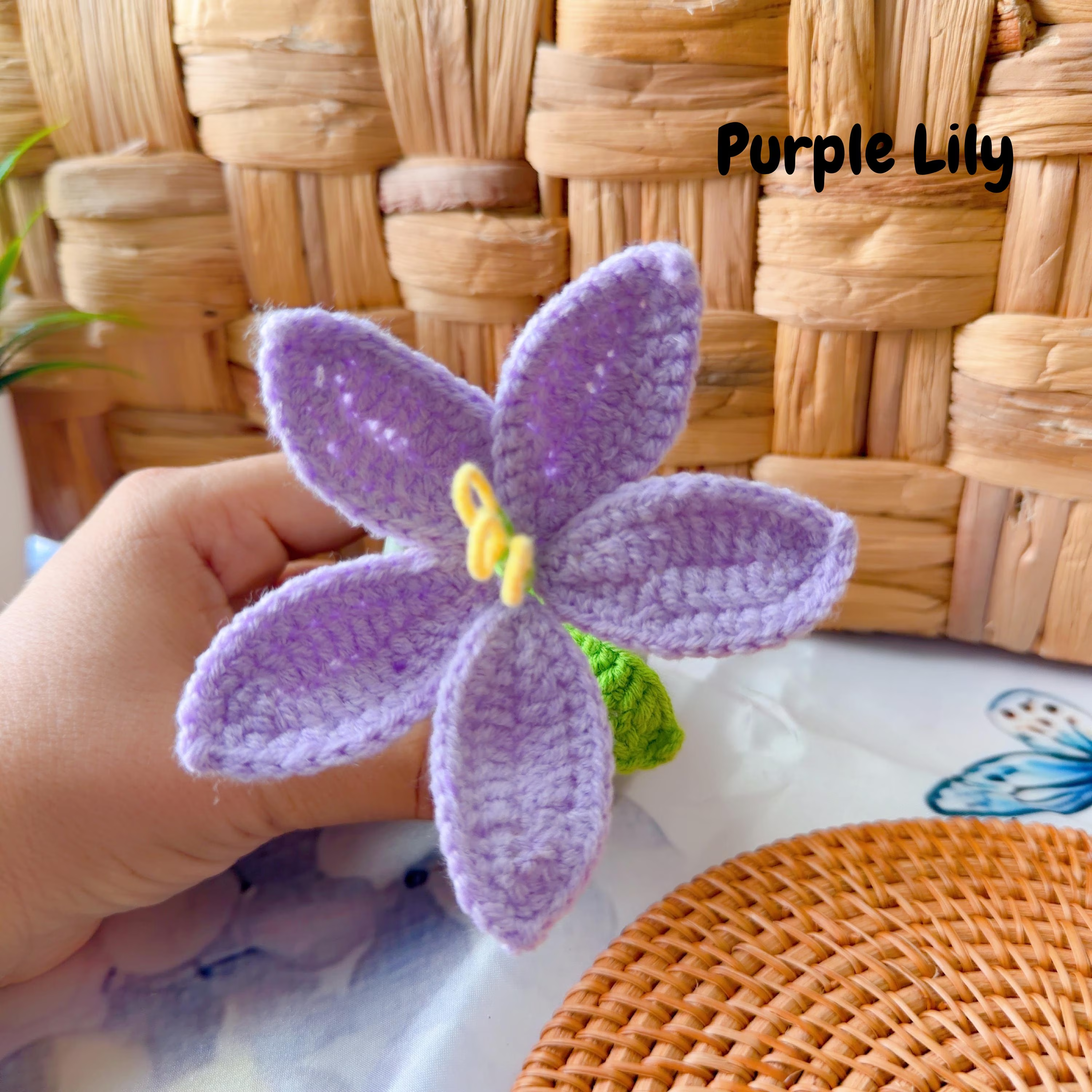
Starting a first wholesale order can feel like a series of trade-offs: variety versus inventory risk, eye-catching pieces versus steady sellers, display needs versus backroom storage. Use this first wholesale order planning checklist to move from guessing to a deliberate list of questions that guide what to buy, how much, and how to present it in your shop.
First wholesale order planning checklist
Begin by answering a handful of basic questions that will shape every other decision: Who is your core customer, what price range do you typically stock, and how much display space can you realistically dedicate to a new brand or category? These answers narrow down which items from a maker’s range deserve priority.
Translate those answers into concrete targets: a target price band (for example, impulse buys under $20 or gift items under $60), a target merchandise footprint in linear feet or a number of fixture faces, and a target turnover rate you hope to achieve in the first 60–90 days. These targets make it easier to evaluate assortment and order size.
Know your customer fit
Ask specific questions about your customer’s shopping habits: are they tourists looking for small, easy-to-pack pieces, locals seeking unique home goods, or hobbyists hunting craft supplies? Matching categories like Amigurumi, Wall Hangings, Crochet or Craft Supplies to those buyer profiles will guide which listings to prioritize.
Consider seasonality and gift patterns. If your location attracts visitors during a short season, lean toward smaller, lower-cost items that turn quickly. If you serve a consistent local clientele, a deeper range with higher-priced or slow-moving specialty pieces might make sense despite longer sell-through timelines.
Decide assortment depth and breadth
Trade-offs: breadth brings variety and the chance to appeal to more shoppers, while depth reduces SKUs and makes reorders simpler. For an initial order, pick categories to go wide in (several styles, few units each) and categories to go deep in (one or two styles, more units) based on projected demand patterns.
A realistic example: for a small storefront, choose three wall-hanging designs with four units each to create a visible display, while offering a wider variety of smaller amigurumi with two units each to test which characters sell. This strategy limits upfront investment while creating signals for what to reorder.
Measure display and storage space
Before buying, physically map your fixtures. Measure shelf depth, wall hanging linear feet, pegboard capacity and backroom shelf heights. Translate those dimensions into how many units of a given SKU you can show and how many you can hold in reserve; this prevents orders that look great on paper but overwhelm your shop footprint.
Think visually and logistically: clustered small items can read as cluttered if crowding a shelf, while a single oversized piece might need dedicated wall space. Plan for replenishment workflow too—how many units can your staff restock in peak hours without disrupting customer service?
Confirm terms before you commit
Treat vendor terms as part of your buying decision. Key questions: what are minimum order quantities, lead times, payment terms, shipping methods and any restocking or cancellation rules? Confirming these details early avoids surprises that can blow cash flow or delay launch displays.
Consider trade-offs when terms are inflexible. A lower unit price with long lead time may force you to order more than you can present; a shorter lead time with higher per-unit cost can be better for testing assortments. Use contract clarity to plan realistic reorder cadence.
Plan for turnover and reorder points
Decide on simple metrics to trigger reorders: sell-through percentage in a set window, days-on-floor, or absolute inventory thresholds. For a first order, aim to measure and review after a fixed period—often 30 to 90 days—so you have data to adjust assortment depth and SKUs for the next buy.
Build a lightweight reorder plan that accounts for lead times and minimums. If a supplier requires a two-week lead time, set your reorder threshold to cover sales during production plus a buffer. Treat this plan as an experiment: record what sells and why, then refine quantities and product mix on the next order.
A useful first wholesale order starts with focused questions about customer fit, assortment choices, available display space and clear vendor terms. Use small, measurable tests rather than large speculative buys: map your space, set price-band targets, pick which categories to go deep in and which to sample, and confirm lead times and minimums ahead of time. If you want to discuss wholesale options or the 108 listings across Amigurumi, Crochet, Wall Hangings and Craft Supplies & Tools we carry, contact Helium South Beach at [email protected] or +1 305-538-4526, or visit us at 760 Ocean Drive Store No. 6, Miami Beach, FL 33139. Follow @helium_southbeach on Instagram for visual inspiration before you order.